I didn't want to buy a knife block.
What happens when I own more knives than it has slots, or buy a chef's knife that doesn't fit any of them? Fortunately, there was no need to spend $30 on a knife block when I had already spent far more on a 3D printer.
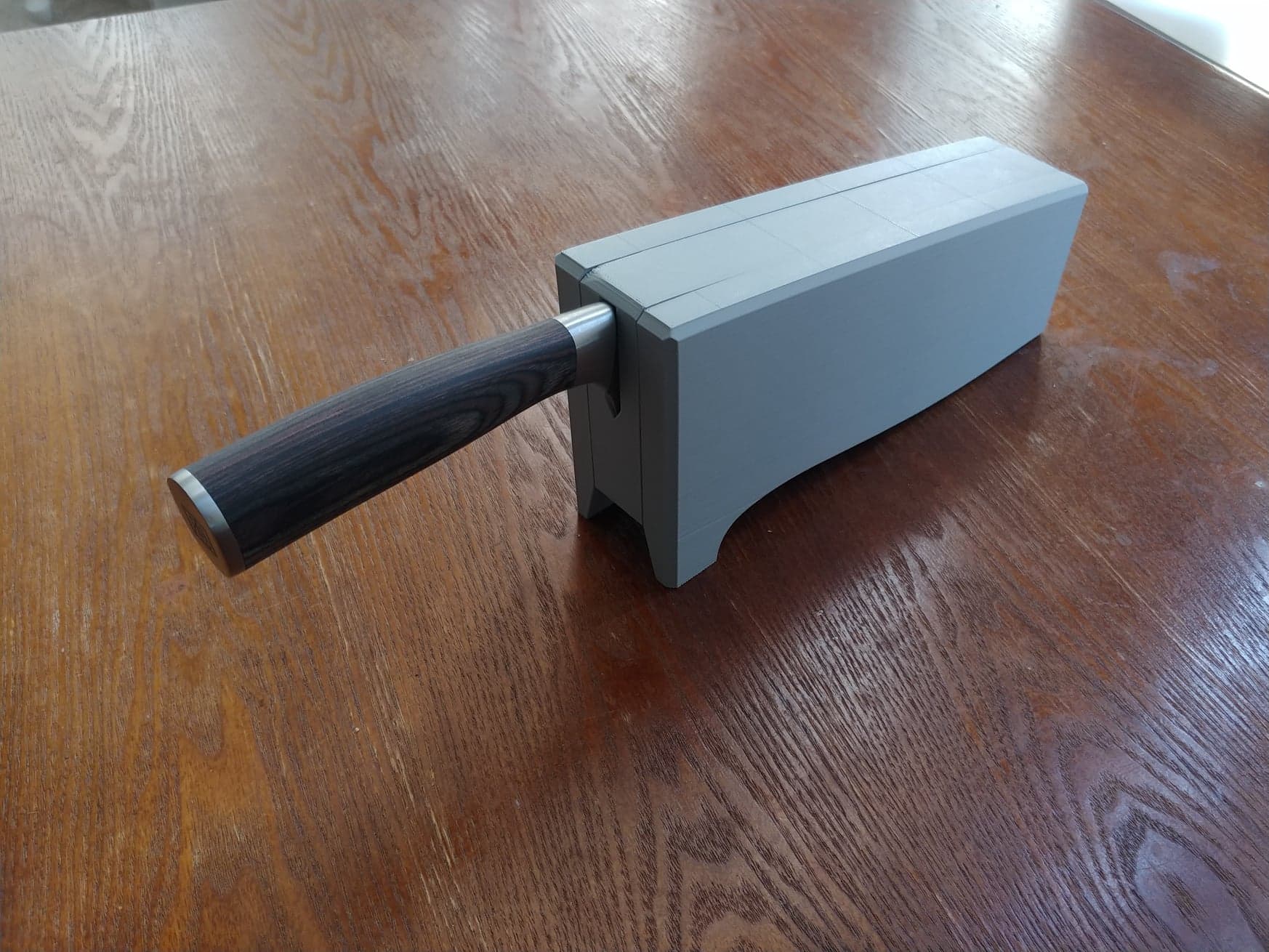
The world's shortest knife block.
As a college student, I had to design with the future in mind. I had no idea which kitchen knives I would end up with, so the knife block needed to adapt. That is why I made it completely modular.
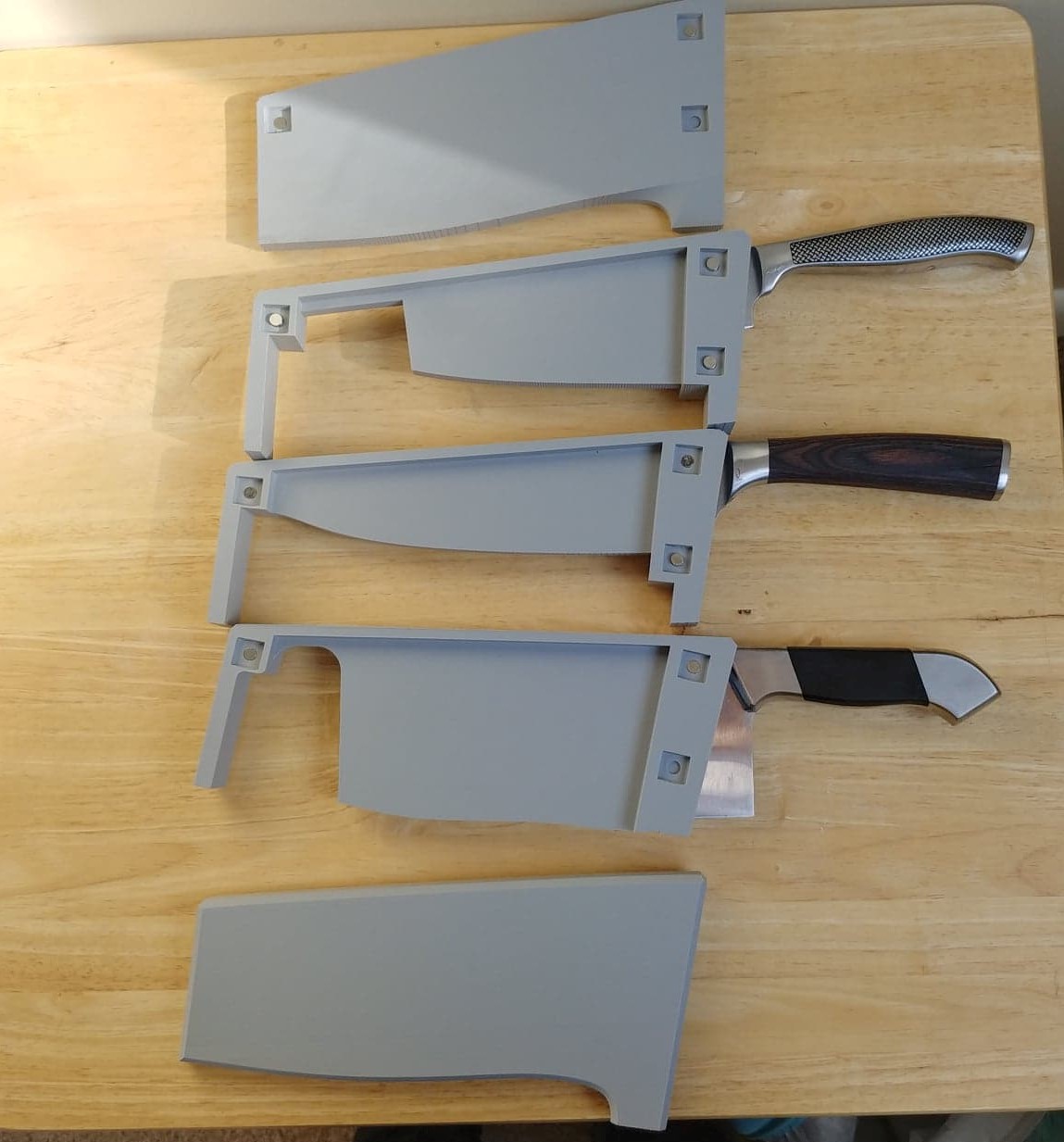
All of the modules in my modular knife block.
Apart from the magnetic interfaces and an overall size envelope, each section of the block can be customized to fit any knife I happen to buy (within reason). All I need to do is adjust the template model and print. I also designed the magnets to self-align, so the modules snap together with a satisfying click.
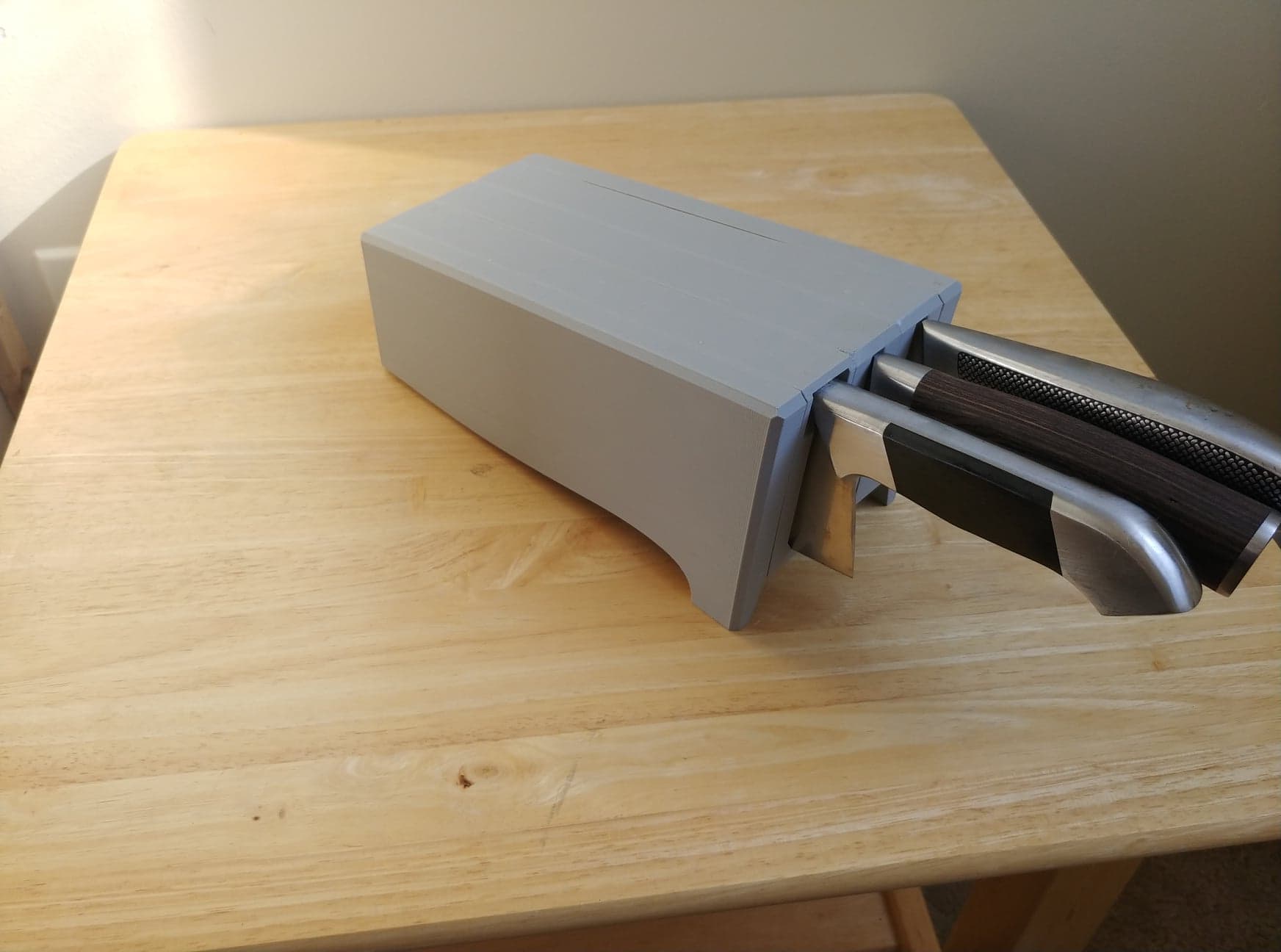
The knife block at its current size. It is sure to grow as I cook more.
Although I only had three knives at the time, I was quite happy with the overall design. In theory, I could keep adding modules until it became more of a knife bookcase than a knife block, but I doubt that will be necessary. If I were to do this again, I would add a fourth magnet to each interface. The blocks are reasonably secure with three, but four would give me more confidence. The only other change isn't a design issue: I would stop myself from opening the window while the parts were printing. The cold night air warped them slightly, but since they work and would take a lot of plastic to reprint, I kept them. Even so, the uneven tops of the modules bother me a little more every time I see them, so I may reprint them sooner or later.